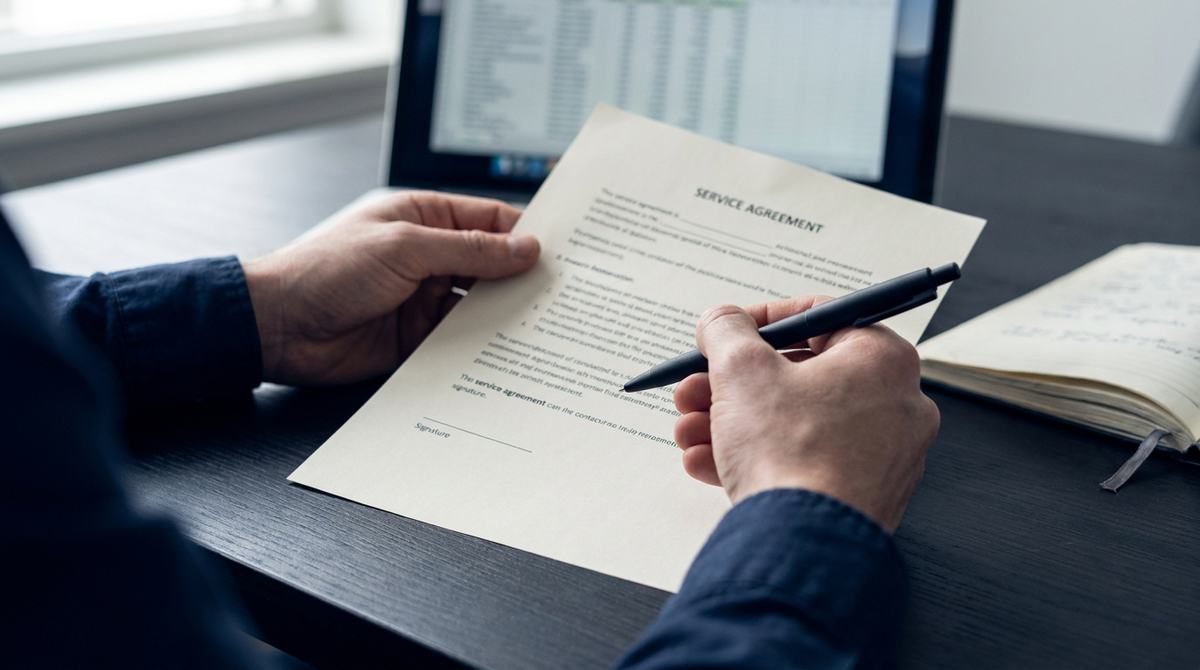


A freelance proposal is the document you send after a first conversation to show you understand the problem, explain how you will solve it and set out the price. A good one wins work. A weak one gets a polite "we will let you know". Here is how to write a proposal that clients actually read and say yes to.
Proposal, quote or contract?
These three are often confused:
- A proposal persuades. It explains the problem, your approach and the outcome, then includes the price.
- A quotation focuses on price and scope. It is often shorter and can sit inside a proposal.
- A contract is the agreement both sides sign once the client says yes.
For small jobs, a clear one-page quotation may be all you need. For larger or more complex work, a proposal helps the client feel safe choosing you.
What to put in a proposal
1. A short summary of the problem
Begin with the client's situation in their own words. "You are launching a new online shop and need product pages that load fast and convert visitors into buyers." This shows you listened and sets up everything that follows.
2. Your recommended solution
Describe what you will do in plain language. Focus on outcomes, not tasks. "A simple five-page site that makes ordering easy on a phone" is better than a list of tools.
3. Deliverables
List exactly what the client receives: pages, files, formats, number of revisions. Add a short list of what is not included, so there are no surprises.
4. Timeline
Give a start date, the main milestones and a finish date. Say what you need from the client and by when, since late feedback is the most common reason for delays.
5. Price and payment terms
State the total, how it breaks down, the deposit, when the balance is due and what is covered by revisions. If you can, offer two or three options at different prices. Many clients choose the middle one.
6. Proof
Add one or two relevant samples or a short testimonial. Link to them rather than attaching large files.
7. Next steps
Tell the client exactly how to say yes: "Reply with Approved and I will send the invoice for the deposit." Make acceptance as easy as possible.
A simple structure to copy
- Your understanding of the project
- Your proposed approach
- Deliverables and exclusions
- Timeline
- Pricing and terms
- Examples of similar work
- How to accept
Keep it short
Most clients skim. One to three pages is enough for most freelance projects. Use headings, short paragraphs and a clear price section. A long, dense document signals a long, dense project.
Tailor every proposal
Copy-pasted proposals are easy to spot and easy to ignore. You can reuse a template, but change the opening, the details and the examples for every client. The more it sounds like it was written for them, the better it performs.
Common proposal mistakes
- Talking about yourself for pages before addressing the client's problem.
- Hiding the price at the very end or not giving one at all.
- Using jargon the client does not understand.
- Not saying what is excluded.
- Forgetting a valid-until date.
- Not following up.
Follow up politely
If you have not heard back after three or four days, send a short message: "Just checking you received the proposal, and happy to adjust anything." Often the client simply got busy.
After they accept
Confirm the details in writing, take the deposit and start. When the work is done, invoice using the same items and prices from the accepted proposal so the numbers match.
Need the pricing page of your proposal fast? Use the free quotation generator on this site, then keep every client and order organised in the app.
Make your next one in minutes.
Create a free invoice or quotation in your browser, or get the FreelanceDesk app to handle clients, payments and income.